Non classé
Témoignage : Comment j’ai choisi ma machine cuir
Nov
Introduction
Vous rêvez de vous lancer dans le travail du cuir mais ne savez pas par où commencer ? Choisir sa première machine représente souvent un défi intimidant. Avec une offre pléthorique sur le marché, difficile de s’y retrouver entre les différentes marques, fonctionnalités et gammes de prix.
Rassurez-vous, j’étais dans la même situation il y a quelques années. Passionné par la maroquinerie depuis mon plus jeune âge, j’ai décidé de sauter le pas en 2020 et d’investir dans une machine professionnelle. Après de nombreuses recherches et hésitations, j’ai finalement trouvé l’équipement idéal pour débuter mon activité sereinement.
Dans cet article, je partage avec vous mon expérience et mes conseils pour bien choisir votre première machine à coudre le cuir. Suivez le guide !
Mon parcours dans la maroquinerie
Tout a commencé quand j’étais enfant. Je passais des heures à observer mon grand-père travailler le cuir dans son atelier. Watching him meticulously craft wallets, belts and purses fascinated me. I dreamed that one day, I too could create such beautiful objects with my own hands.
Years later, as an adult, I decided to make that childhood dream a reality. I started by taking evening classes to learn the basics of leatherwork. I practiced stitching, cutting and edge finishing on small projects like card holders and key chains.
But I quickly realized that to take my passion to the next level, I would need to invest in a proper leather sewing machine. Hand stitching was great for small items, but too time-consuming for larger projects. If I wanted to eventually turn my hobby into a business, I needed professional equipment.
Finding the perfect machine
Thus began my quest for the ideal starter machine. I spent countless hours scouring the internet, reading reviews and comparing specs. I quickly became overwhelmed by the sheer number of options available.
Did I want a flatbed or cylinder arm machine? What about the number and types of stitches? How powerful of a motor did I really need? And of course, there was the question of budget. Entry-level machines started around $500, but high-end models could easily cost over $5000!
To help narrow down my choices, I made a list of my top priorities:
- Versatility to sew different weights of leather
- Ease of use as a beginner
- Durability and reliability for long-term use
- Reasonable price for the features and quality
I also reached out to the leatherworking community on forums and Facebook groups for their insights. Experienced artisans generously shared their recommendations based on their own trial and error over the years.
Making the investment
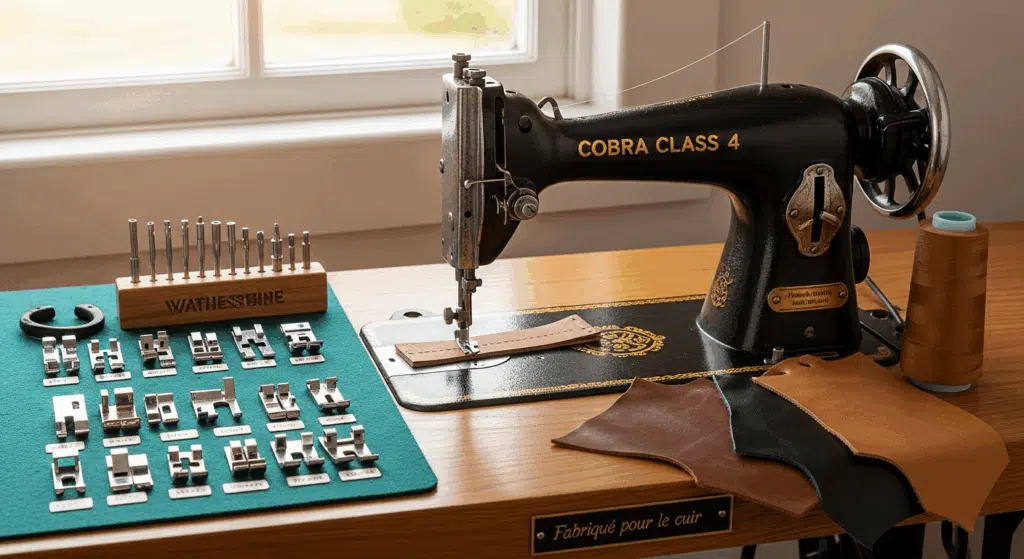
After much deliberation, I finally settled on a machine that ticked all my boxes: the Cobra Class 4 from Cobra Sewing Machines. While not the cheapest model at around $1500, its stellar reviews and 25-year warranty gave me confidence in the investment.
When the machine arrived, I was giddy with excitement but also slightly terrified. It looked so much more intimidating than my little home sewing machine! But as soon as I started practicing on it, I knew I had made the right choice.
The Cobra handled every thickness of leather I threw at it, from thin sheepskin to sturdy 8-ounce veg tan. The self-oiling system made maintenance a breeze. And while it took some getting used to, the built-in servo motor delivered smooth, consistent stitching.
As I spent more time with my new machine, my skills and confidence grew. I started taking on bigger projects and even some commissions from friends and family. My dream of having my own leather goods business suddenly seemed within reach.
Lessons learned
Looking back on my experience, here are my key takeaways for anyone considering buying their first leather sewing machine:
-
Do your research – Read reviews, compare features and ask the community for advice before making a decision.
-
Buy the best you can afford – While expensive, a high-quality machine is worth the investment if you’re serious about leatherwork. It will make your sewing experience more enjoyable and your finished products more professional.
-
Prioritize versatility – Look for a machine that can handle various weights and thicknesses of leather. You may start with simpler projects but your skills and ambitions will likely grow over time.
-
Don’t neglect training – Join a class or workshop to learn proper techniques and get comfortable using your machine. The leathercraft community is incredibly supportive and generous with their knowledge.
-
Start small but dream big – Even if you’re just sewing as a hobby for now, choose equipment that will support your long-term goals. With dedication and a reliable machine, there’s no limit to how far your passion can take you.
Conclusion
Investing in my Cobra Class 4 leather sewing machine was hands-down one of the best decisions I’ve made for my leatherworking journey. It empowered me to take my craftsmanship to the next level and gave me the confidence to turn my passion into a side hustle.
If you’re on the fence about taking the plunge, I wholeheartedly encourage you to go for it. With the right machine and a bit of practice, you’ll be amazed at the professional-quality goods you can create.
The world of leatherwork is endlessly exciting and rewarding. And it all starts with finding your perfect sewing companion. Begin your research, join the community and get ready to make your leather dreams a reality. Trust me, you won’t regret it.
Happy sewing!